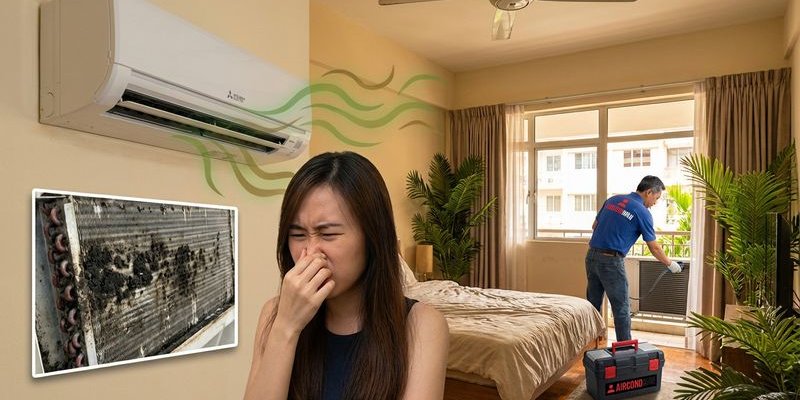
You expect a blast of cool, refreshing air when you turn on your aircond, especially in Malaysia’s heat. Instead, you get a waft of something foul—like dirty socks, vinegar, or something even worse.
This isn’t just unpleasant; it’s a sign your unit is struggling against our 80% average humidity. The moisture that keeps us sweating is also fueling bacteria and mold deep inside your machine. Ignoring it often leads to leaks, breakdowns, and even respiratory issues for your family.
This guide will break down exactly what each smell means and give you the insider strategies to negotiate a fantastic deal on your next service or fix it yourself.
Common Aircond Smells & Their Causes
1. 🧦 Musty/Moldy Smell (“Dirty Socks”)
The most common complaint in Malaysia.
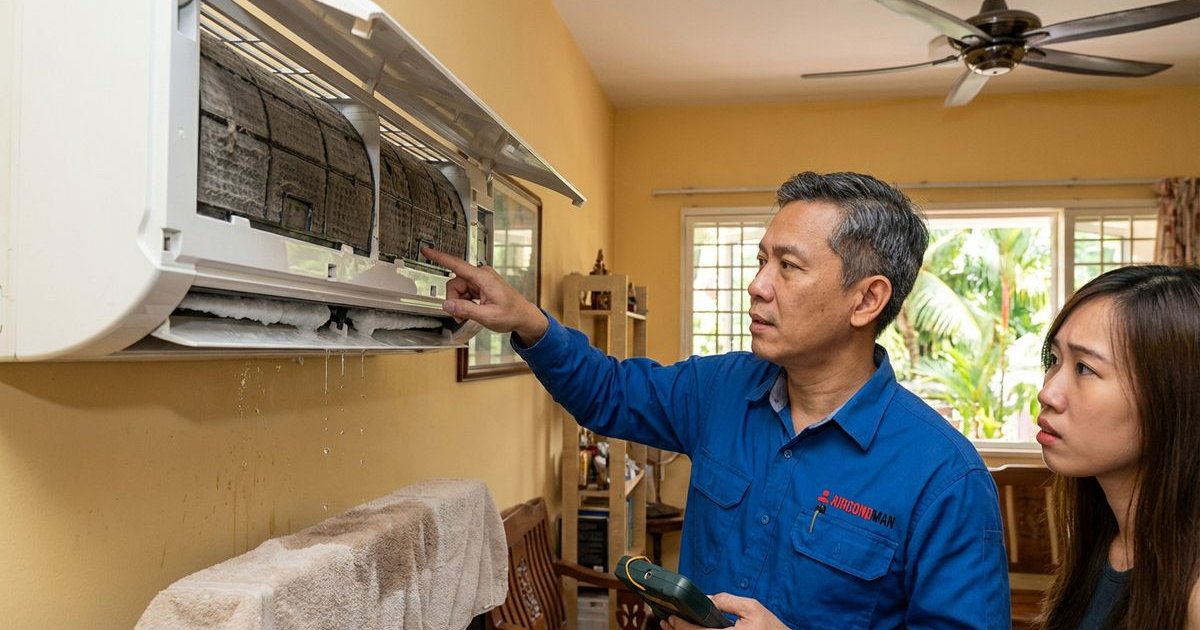
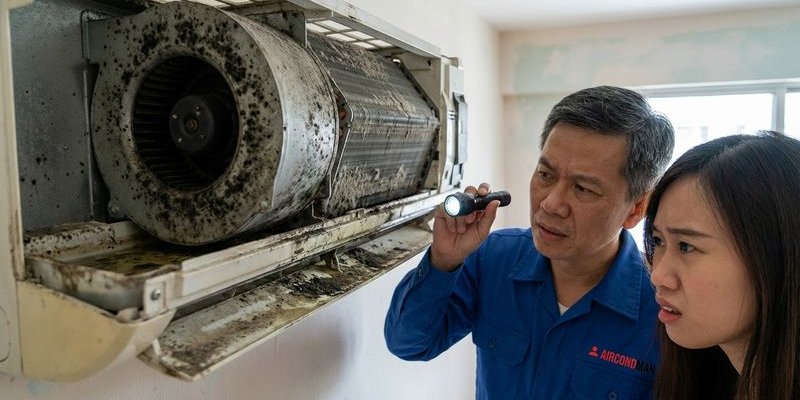
This smell usually means you have a mold infestation. In our tropical climate, the most frequent culprit is Aspergillus, a type of mold that thrives on the damp, dark surfaces of your cooling coil. It feeds on the dust trapped in your unit, creating that distinct “locker room” odor.
Why it happens:
- High Humidity: Condensation never fully dries, creating a permanent breeding ground.
- Biofilm Buildup: A slimy layer of bacteria and fungi forms on the evaporator coil.
- Clogged Drainage: Water stays stagnant in the pan instead of flowing out.
Where it grows:
- Evaporator coil (the cold metal fins).
- Blower wheel (the spinning fan cylinder).
- Inside the drainage pipe (often causing “jelly” clogs).
Solution:
- Chemical Wash: Required to dissolve the biofilm. Water alone won’t work.
- Fan Mode Trick: Run your unit on “Fan Mode” for 30 minutes after cooling to dry the coil.
2. 🍋 Sour/Vinegar Smell
Cause: Bacterial fermentation or acidic decomposition.
While mold smells earthy, a sour smell is sharp. This often indicates that organic matter is fermenting in the standing water of your drain pan. It is similar to the smell of a damp kitchen sponge that has been left out too long.
Why it happens:
- Stagnant Water: The drain angle is too flat, preventing water from flowing out.
- Organic Debris: Skin cells and dust mix with water to form a sludge.
- Insect Waste: Droppings from pests decompose in the moisture.
Solution:
- Flush the Drain Line: Use a vacuum or pressure pump to clear the blockage.
- Sanitize the Pan: Place an anti-bacterial tablet (pan tablet) in the tray.
3. 🚽 Sewage/Rotten Smell
Cause: Dried P-trap or open sewer connection.
This is frightening but common in high-rise condos like those in KL or Penang. Your aircond’s drain pipe likely connects to a shared waste line. If the water barrier (trap) dries out, sewer gas flows backward into your room.
Why it happens:
- Dry U-Trap: You haven’t used this specific unit for weeks (common in guest rooms).
- Shared Piping: The developer connected the AC drain directly to the master waste pipe without a proper seal.
- Dead Pests: A lizard (cicak) or small rat has crawled inside and died.
Solution:
- Refill the Trap: Pour a bottle of water slowly into the drain pan to recreate the water seal.
- Install a Non-Return Valve: This simple plastic flap lets water out but stops gas from coming in.
- Search for Carcasses: If the smell is sweet and rotting, check the blower fan for a dead lizard.
4. ⚡ Burning/Electrical Smell
Cause: Overheating components or wiring failure.
Why it happens:
- Failing Capacitor: The small battery-like cylinder that starts the motor is swelling or bursting.
- Motor Burnout: The fan motor is jammed by dust and overheating.
- Melted Insulation: Wiring plastic is melting due to a short circuit.
WARNING: This is a fire hazard. Turn off the unit immediately at the wall switch. Do not turn it back on until a professional has inspected it.
5. 🧪 Chemical/Plastic Smell
Cause: Off-gassing or harsh cleaning residue.
Why it happens:
- New Unit Off-Gassing: New plastics release volatile organic compounds (VOCs) for the first 48-72 hours.
- Poor Rinsing: A technician used a strong alkaline coil cleaner (common in cheap services) and didn’t rinse it off, leaving a chemical tang.
- Glue or Adhesives: Often noticed after a new installation where PVC glue was used heavily.
Solution:
- Ventilate: Open windows and run the fan on high for 2 hours.
- Rinse: If it smells acrid after a service, spray fresh water on the coil to remove residue.
6. 🚬 Cigarette/Smoke Smell
Cause: Tobacco tar accumulation.
Why it happens: Tobacco smoke is oily. The tar particles are sticky and coat the aluminum fins of your cooling coil. When the unit runs, humidity re-activates the tar, blowing stale smoke back into the room.
Solution:
- Chemical Overhaul: A standard wash isn’t enough. You need an alkaline chemical to strip the sticky tar.
- Filter Replacement: The mesh filters are likely permanently stained and hold the odor.
7. 🐱 Ammonia/Urine Smell
Cause: Rodent infestation or mold byproducts.
Why it happens:
- Pest Urine: Mice or rats nesting in the ceiling or outdoor compressor unit.
- Specific Mold: Some mold species release ammonia-like gases as they consume specific materials in your home.
Solution:
- Inspect Ceiling: Check the area above the unit for rat droppings.
- Seal Entry Points: Use steel wool to block gaps where pipes enter the wall.
Smell Diagnosis Flowchart
Use this quick guide to identify your next step:
| Smell Description | Likely Culprit | Immediate Action |
|---|---|---|
| Old Gym Socks | Mold/Mildew | Chemical Wash |
| Sour Vinegar | Bacterial Slime | Clean Drain Pan |
| Rotten Eggs/Sewage | Dry Trap / Gas | Pour Water in Drain |
| Burning Plastic | Electrical Fault | STOP USE NOW |
| Sweet Rot | Dead Lizard | Remove Carcass |
| Chemicals | Cleaner Residue | Ventilate Room |
DIY vs Professional Solutions
You can fix minor issues yourself, but Malaysian airconds often face heavy buildup that requires heavy-duty tools.
What You Can Try (DIY)
- Filter Cleaning: Wash the plastic mesh filters in the bathroom every 2 weeks. This improves airflow but rarely fixes deep smells.
- Surface Wipe: Use a damp cloth to wipe the louvers (swing blades) where black mold spots often appear.
- Pressure Spray: Buy a generic hand-pump pressure sprayer (available at hardware shops like Mr. DIY) to rinse the coil with water.
- Fan-Only Mode: Run the unit on ‘Fan’ mode (no cooling) for 1 hour to dry out the internals.
When to Call a Professional
- Black Flakes: If the unit spits out black specks, the blower wheel is caked with mold. You cannot clean this without dismantling the unit.
- Water Leaking: A jelly clog in the drain pipe needs vacuuming or flushing.
- Persistent Smell: If the smell returns 2 days after you clean the filter, the source is deep inside the coil.
Prevention Tips
Regular Maintenance Schedule
| Action | Frequency (Malaysia) | Why It Matters |
|---|---|---|
| Filter Washing | Every 2 Weeks | Prevents dust from reaching the damp coil. |
| Chemical Wash | Every 6-12 Months | Removes the “biofilm” that soap and water can’t touch. |
| Chemical Overhaul | Every 18-24 Months | Complete teardown to clean the back of the tray and fan. |
Daily Habits for the Tropics
- The “Shut-Down” Routine: Don’t just turn the AC off. Switch to “Fan Mode” for 20 minutes before powering down. This dries the moisture on the coil and prevents mold from growing overnight.
- Dry Mode: On rainy days, use “Dry Mode” (the water drop icon) instead of “Cool Mode”. It lowers humidity effectively without overcooling the room.
- Modern Tech: If buying a new unit, look for features like Panasonic’s Nanoe-X or Daikin’s Streamer Technology. These actively neutralize mold spores and bacteria in the air.
The Professional Solution Process
Knowing the market rates protects you from being overcharged. Here are the standard rates for 2025 in Malaysia.
Chemical Wash (General Service)
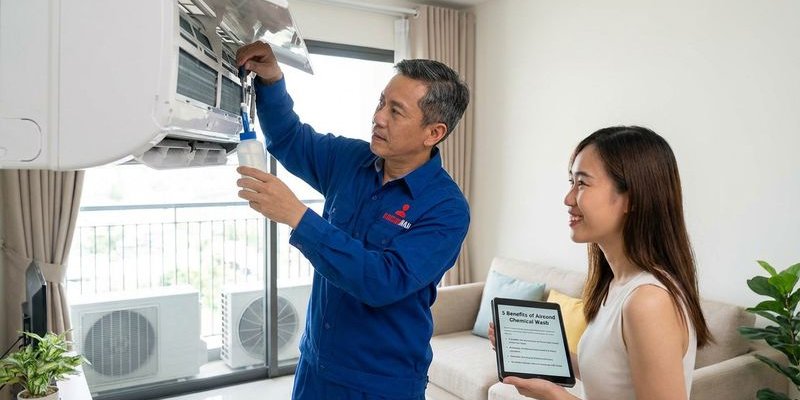
This is for units that are dirty but still functioning well. The technician uses a “hanging bag” to catch water while they spray the coil on the wall.
- Process: Chemical spray on coil + blower, high-pressure rinse, drain flush.
- Target: Surface mold, light odors, dust.
- Estimated Cost: RM120 - RM170 (1.0HP - 1.5HP).
- Duration: 45 - 60 minutes.
Chemical Overhaul (Deep Clean)
This is for units with bad smells, weak airflow, or “jelly” problems. The technician must pump down the gas and remove the entire indoor unit from the wall.
- Process: Full dismantling. The coil, fan, and drain tray are soaked in chemical solution in a bathroom or outdoor area.
- Target: Deep-seated mold, “dead animal” smells, sticky tar.
- Estimated Cost: RM180 - RM250.
- Duration: 2 - 3 hours.
A Note on Gas Top-Ups
Technicians often suggest a “gas top-up” for an extra RM50-RM80. Be careful. Aircond gas (Refrigerant R32 or R410A) is a closed system. Unless there is a leak, you never need to top it up. If they say gas is low, ask them to show you the leak bubbles first.
When Smell Indicates Health Risk
Mold in your AC isn’t just gross; it’s a health hazard. Aspergillus spores can trigger asthma attacks, sinus congestion, and chronic coughing.
Take action immediately if you notice:
- The “Sick Building” Effect: You feel headaches or fatigue in the air-conditioned room, but feel better when you leave.
- Visible Black Dust: This dust on your vents is actually colonies of mold spores being blown into your face.
- Respiratory Flares: Kids or elderly family members start wheezing or coughing at night.
Summary
Don’t let a bad smell compromise your comfort or health. Use this final checklist to decide your move.
| Smell | Urgency | Action |
|---|---|---|
| Musty/Earthy | Medium | Schedule Chemical Wash |
| Sour/Vinegar | Medium | Check Drain Pan & Pipe |
| Sewage | Medium | Pour Water in Trap / Install Valve |
| Burning | HIGH | Turn Off & Call Pro Immediately |
| Chemical | Low | Ventilate Room |
| Ammonia | High | Check for Pests |
Bad smell from your aircond? Contact Aircond Man - we’ll diagnose the cause and eliminate it with proper treatment.