We’ve all stood in front of the remote, thumb hovering over the buttons, torn between sweating in the Malaysian heat or freezing in a sudden arctic blast. Set it too low, and you waste hard-earned money. Set it too high, and the humidity takes over.
But the real cost of getting it wrong isn’t just discomfort—it’s in your monthly bill. In Malaysia, electricity tariffs are tiered, meaning high usage can push you into a bracket where you pay over 50% more for every unit of energy.
This guide helps you find the sweet spot that keeps your home cool and your TNB bill manageable.
The Quick Answer
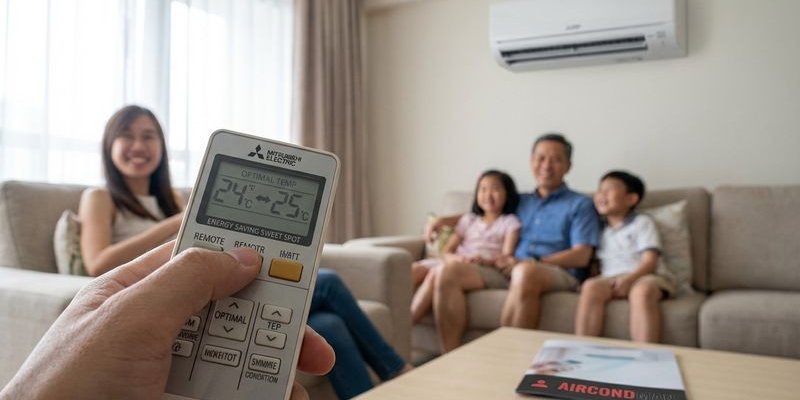
For most Malaysian homes: 24°C
Official Recommendation: Both Tenaga Nasional Berhad (TNB) and the Sustainable Energy Development Authority (SEDA) identify 24°C to 26°C as the ideal balance for energy efficiency and thermal comfort in our tropical climate.
At 24°C, your compressor operates efficiently to combat the typical 32°C outdoor heat without overworking. However, the “perfect” setting shifts based on your specific activity and room conditions.
Temperature Guide by Situation
Daytime Living Areas
Recommended: 24-25°C
In a living room, you rarely need arctic temperatures. Setting your unit to 24°C provides a comfortable environment for light activities like watching TV or chatting.
- Why it works: This range is cool enough to counter the afternoon heat but high enough to prevent the compressor from running at maximum capacity constantly.
- Pro Tip: If you have high ceilings or large windows, use a standing fan to circulate the cool air rather than lowering the temperature further.
While Working (Home Office)
Recommended: 23-24°C
Focus requires a slightly cooler environment. A study by Cornell University found that temperatures around 25°C are optimal for typing accuracy, but in humid Malaysia, dropping to 23°C often helps combat the “sticky” feeling that distracts from deep work.
- The Benefit: Prevents the drowsiness associated with warmer rooms while avoiding the finger-numbing chill that slows down typing.
Sleeping
Recommended: 25-27°C (with Sleep Mode)
Your body temperature naturally drops while you sleep. A room that feels perfect at 11 PM will feel freezing by 3 AM.
- The Strategy: Set the unit to 26°C and activate “Sleep Mode” (found on most remotes from brands like Panasonic and Daikin). This feature gradually raises the temperature by 1-2°C throughout the night, preventing you from waking up shivering and saving electricity while you dream.
Exercise/High Activity
Recommended: 22-23°C
When you generate body heat during a HIIT workout or yoga session, you need stronger cooling power.
- The Action: Drop the temperature 15 minutes before you start. Once you finish cooling down, remember to reset it to 24°C immediately to avoid wasting energy on an empty cooling space.
The Cost of Each Degree (TNB Rates)
In Malaysia, electricity is charged in blocks. The more you use, the more expensive each unit becomes.
If your air conditioning pushes your total household usage over 300 kWh per month, your tariff rate jumps from 33.40 sen to 51.60 sen per unit. That is a massive 54% price hike.
Every degree matters. Lowering your temperature by just 1°C can increase that unit’s electricity usage by up to 7-10%.
| Temperature | Efficiency Impact | Estimated Monthly Cost Impact* |
|---|---|---|
| 18°C | Very Expensive | Highest Bill (Compressor rarely stops) |
| 20°C | Expensive | +20-30% vs Baseline |
| 22°C | Moderate | +10-15% vs Baseline |
| 24°C | Baseline | Optimised Savings |
| 26°C | High Savings | -10% Savings |
*Estimates based on typical non-inverter performance curves.
Annual savings (20°C vs 24°C): For a standard 1.5HP unit running 8 hours a day, switching from 20°C to 24°C can save you approximately RM300-RM400 per year, per unit.
The Science of Comfort: Battling Humidity
Why does 24°C feel cool in a mall but hot in your bedroom? The answer is Relative Humidity (RH).
Kuala Lumpur averages around 80% humidity year-round. High moisture in the air prevents sweat from evaporating, making you feel hotter than the thermometer suggests.
The “Dry Mode” Secret
If you feel sticky even when the AC is on, do not lower the temperature. Instead, switch to Dry Mode (look for the water drop icon on your remote).
- How it works: This mode focuses on removing moisture rather than just cooling the air. It runs the fan at a lower speed, allowing the air to pass over the cooling coils slowly, condensing more water.
- The Result: A 26°C room with low humidity feels as cool as a 24°C room with high humidity, but costs significantly less to maintain.
Comparison:
| Setup | AC Setting | Feels Like |
|---|---|---|
| AC only (Cool Mode) | 24°C | 24°C |
| AC + Ceiling Fan | 24°C | ~22°C |
| AC (Dry Mode) | 26°C | ~24°C |
Tip: Run your ceiling fan at low speed alongside your AC set to 24°C. The “wind chill” effect from the fan evaporates moisture from your skin, making you feel 2°C cooler without touching the remote.
Temperature Myths Debunked
Myth 1: “Setting it to 16°C cools the room faster”
False. Your air conditioner works at the same speed regardless of the target temperature. Setting it to 16°C simply tells the compressor to never stop until it hits that freezing point—which, in our tropical climate, it likely never will.
- Reality: Set your target (e.g., 24°C). The unit will cool at maximum speed until it reaches that level, then settle down.
Myth 2: “Inverter ACs save money if left on all day”
Partially True. Inverter technology (found in modern Daikin, Panasonic, and York models) is designed to maintain temperature efficiently rather than starting and stopping. However, leaving it on while you are out for 8 hours is still wasteful.
- Reality: If you leave for more than 45-60 minutes, turn it off. The energy required to cool the room down again is less than the energy used to run it for hours in an empty house.
Myth 3: “Auto Mode is the best for savings”
Sometimes. Auto mode adjusts fan speed and cooling based on sensors. In cheaper models, this can lead to erratic behavior where the fan blows too soft to circulate air effectively.
- Reality: For consistent savings, use Cool Mode with a fixed temperature of 24°C and a medium fan speed (or Auto Fan specifically).
Special Situations
Baby’s Room
Recommended: 25-27°C Pediatric guidelines often suggest cooler temperatures (16-20°C) for Western climates to prevent SIDS, but Malaysian experts and parenting resources like Zeecloud recommend 25-27°C for local babies dressed in light cotton.
- Safety Check: Babies cannot regulate their body temperature well. Avoid placing the crib in the direct path of the airflow. Feel their chest (not hands) to check if they are too hot or cold.
Elderly
Recommended: 24-26°C Older adults often have a lower metabolism and feel the cold more intensely. Excessive cold can also aggravate arthritis or joint pain.
- Comfort Tip: Prioritize humidity control (Dry Mode) over low temperatures to keep the air breathable and fresh without the chill.
Sick/Recovering
Recommended: 24-25°C A stable environment aids recovery. While you don’t want a “hot box,” extremely cold dry air can irritate the throat and nasal passages, weakening the immune response.
Pets at Home
Recommended: 26-27°C Most cats and dogs in Malaysia have adapted to the climate. They do not need a 20°C room.
- Pet Tip: A setting of 27°C is sufficient to prevent heatstroke while you are at work, without causing a spike in your bill.
Night Cooling Strategy
You can hack your AC settings to get a better sleep and a lower bill.
- The Pre-Cool (30 mins before bed): Set to 23°C with high fan speed while you brush your teeth. This removes the heat soaked into the walls.
- The Sleep Set (Bedtime): Switch to 26°C and turn on Sleep Mode.
- The Timer Trick: Set the “Off Timer” for 3 or 4 hours.
- Why? By 3 AM, the outside temperature drops. Your well-insulated room will stay cool until morning without the AC running.
Energy-Saving Temperature Strategies
Strategy 1: The Filter Habit
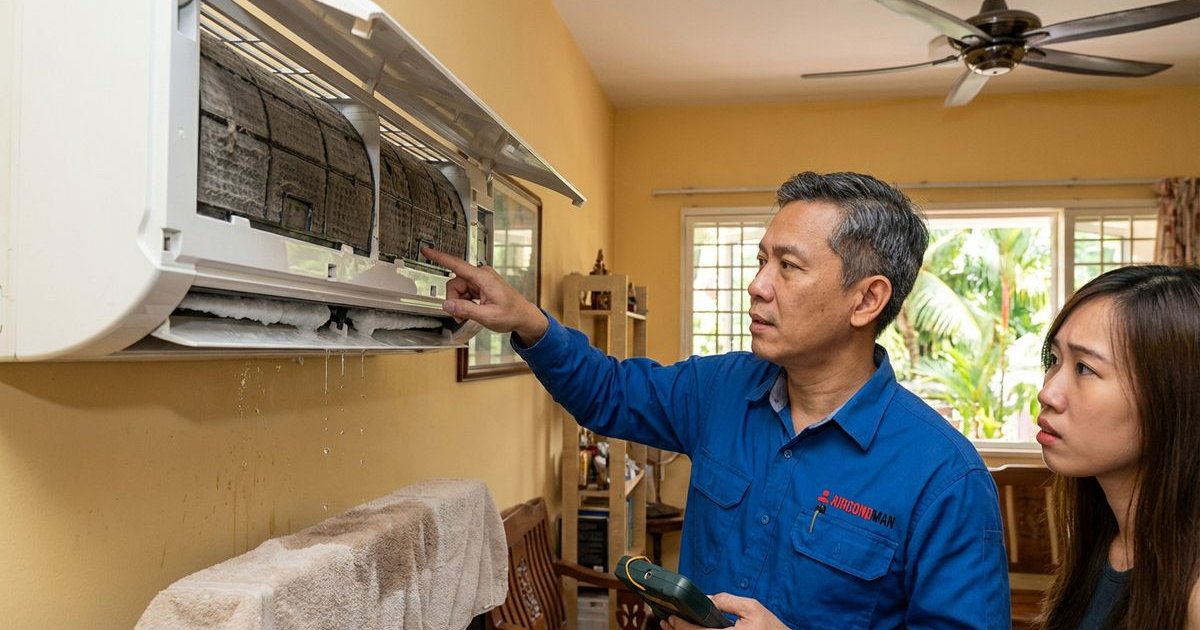
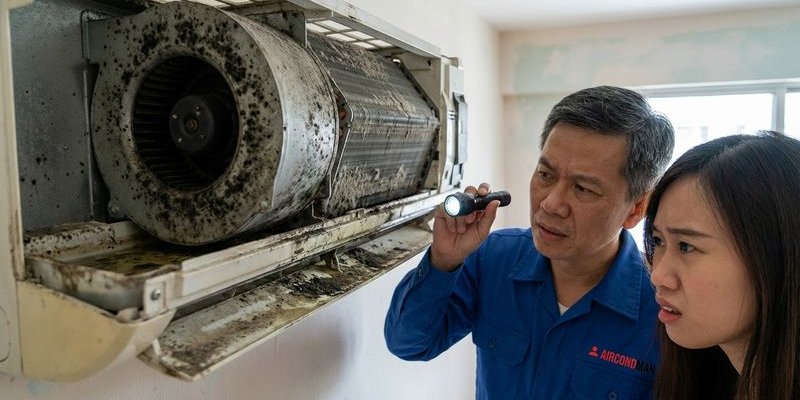
A dirty filter blocks airflow, forcing your unit to work 15% harder to push cool air out.
- Action: Pop the front cover open and rinse the mesh filters every two weeks. It takes 5 minutes and improves cooling performance immediately.
Strategy 2: Zoned Timing
- Living Room: On only when occupied.
- Bedroom: On only at night.
- Result: You never pay to cool an empty space.
Strategy 3: Graduated Comfort
Start your AC at 26°C. If you still feel warm after 15 minutes, drop it to 25°C.
- Psychology: Most people set it to 20°C out of habit, not necessity. You will be surprised at how comfortable 25°C feels with a fan.
Your Personal Comfort Zone
Finding your ideal temperature is a simple experiment:
- Start at 25°C for one week.
- Note your comfort level at different times of the day.
- Adjust by 1°C if needed.
- Give your body 2-3 days to adapt to the new setting.
Most Malaysians eventually land between 24°C and 26°C.
Quick Reference
| Situation | Temperature | Notes |
|---|---|---|
| General daytime | 24-25°C | Best efficiency balance |
| Working/studying | 23-24°C | Prevents drowsiness |
| Sleeping | 25-27°C | Use Sleep Mode & Timer |
| Exercise | 22-23°C | Reset immediately after |
| Baby’s room | 25-27°C | Check chest temperature |
| Humid/Rainy | Dry Mode | Removes sticky feeling |
The Bottom Line
24°C is the sweet spot for most Malaysians.
It keeps you comfortable, keeps humidity in check, and keeps you out of the most expensive TNB tariff blocks.
- Comfortable for daily living.
- Significant energy savings.
- Prevents wear and tear on your compressor.
Remember: A well-maintained AC feels cooler at the same temperature because of better airflow and dehumidification.
AC not cooling properly at these temperatures? Contact Aircond Man - a clean, efficient AC makes any temperature feel better.