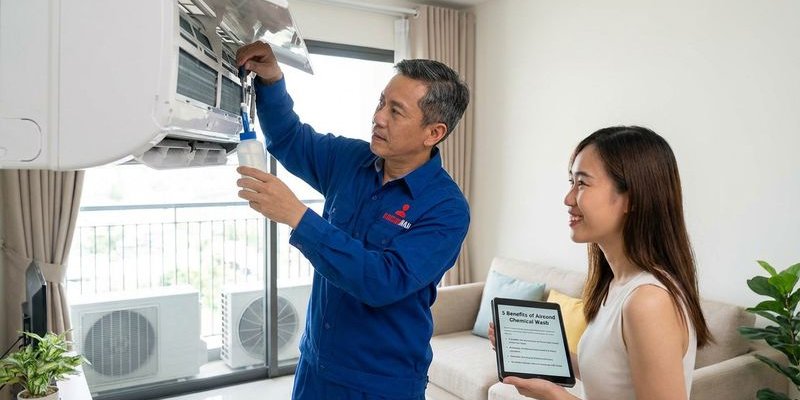
In Malaysia’s humid climate, your air conditioner battles more than just heat; it fights a constant war against moisture and mold. If you’ve ever felt weak airflow or smelled something musty despite a recent service, a standard filter cleaning often isn’t enough. A chemical wash is the strategic reset your unit needs, using specialized alkaline solutions to dissolve the stubborn “jelly” (biofilm) and grime that normal water can’t budge.
This guide breaks down exactly what happens during this deep-cleaning process, the science behind the chemicals we use, and the fair market prices you should expect to pay in 2025.
Overview
Duration: 1 to 1.5 hours per unit What it is: A deep cleaning service that uses alkaline-based chemical solutions to dissolve grime, mold, and bacteria from your aircond’s internal components. The Payoff: Beyond cleaner air, a chemically cleaned unit can reduce energy consumption by up to 15-20%, according to efficiency data. This restores your unit’s ability to cool your room quickly, directly lowering your monthly TNB bill.
Step-by-Step Process
Step 1: Preparation (5-10 minutes)
What happens:
- The technician turns off the aircond and isolates the electrical supply to prevent short circuits.
- We lay protective drop cloths or plastic sheets over your furniture and flooring.
- A specialized waterproof “canvas bag” (often blue or yellow) is strapped tightly around the indoor unit.
Why it matters: This canvas bag is the most critical tool for keeping your home clean. It acts as a funnel, catching the liters of black, chemical-laden water that will flow out of your unit, ensuring none of it splashes onto your walls or parquet floors.
Step 2: Filter and Panel Removal (5 minutes)
What happens:
- The front casing and intake panel are unclipped and removed.
- Air filters are taken out for a separate scrub.
- We wash these parts in a bathroom or outdoor area using water and a mild detergent.
- The plastic casing is wiped down to remove surface dust.
What we look for: We check the condition of your filters. If the mesh is torn, it allows dust to bypass the filter and clog the cooling coil directly.
Step 3: Chemical Application (10-15 minutes)
What happens:
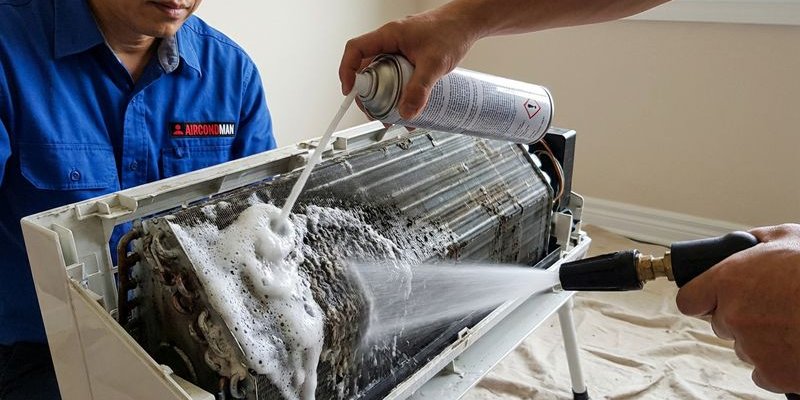
- An alkaline-based coil cleaner (such as products from brands like CleanBee or similar industrial grades) is sprayed onto:
- The Evaporator coil (the silver fins).
- The Blower wheel (the spinning fan).
- The Drainage pan (water tray).
- The Interior housing walls.
- The solution is left to “dwell” or soak for 5-10 minutes.
The science: We use alkaline cleaners because they are safe for aluminium coils but deadly to organic buildup. The foaming action breaks down:
- Biofilm: The “jelly” slime created by bacteria in Malaysia’s humid environment.
- Grease and Oil: Cooking fumes that get sucked into units near kitchens.
- Impacted Dust: Dirt that has mixed with moisture to form a concrete-like layer on your fins.
Safety note: While modern alkaline cleaners are often biodegradable, they are powerful irritants while active. We strongly recommend you leave the room during this 10-minute soaking window to avoid inhaling any fumes.
Step 4: High-Pressure Rinse (15-20 minutes)
What happens:
- Using a pump sprayer, the technician rinses all components with fresh water.
- The pressure is carefully calibrated—strong enough to blast out the dissolved grime, but gentle enough to not bend the delicate aluminum fins.
- We continue rinsing until the water flowing into the canvas bag runs clear.
Key areas cleaned:
- Evaporator Coil Fins: Flushing between the tight metal plates where airflow is often blocked.
- Blower Wheel Blades: Removing the heavy dust “fur” that causes fan imbalance.
- Drainage Pan: Clearing the slime that leads to leaking.
Step 5: Drainage System Flush (5-10 minutes)
What happens:
- Chemical solution is poured directly into the drainage tray and allowed to flow down the pipe.
- We use a high-pressure water gun or a vacuum to flush the drain pipe completely.
- The technician verifies that water exits smoothly at the other end (usually in your bathroom or drain).
Why it matters: In our experience, a blocked drain pipe is the number one cause of water leaking in Malaysian homes. The “jelly” buildup loves to grow in these dark, wet pipes. This step ensures you won’t wake up to a puddle on your floor next week.
Step 6: Blower Wheel Cleaning (10 minutes)
What happens:
- The cylindrical fan (blower) gets a direct chemical spray.
- We clean each blade individually to remove stubborn dust cakes.
- A thorough rinse ensures the fan spins freely without weight imbalances.
Why it matters: A dirty blower wheel is a silent efficiency killer.
- Reduces Airflow: The fan spins, but the dust blocks it from “grabbing” the air.
- Creates Noise: Uneven dust causes the fan to wobble and vibrate.
- Spreads Dust: It continuously blows loose particles back into your room.
Step 7: Reassembly & Testing (10-15 minutes)
What happens:
- We reinstall the dry filters and snap the casing back into place.
- The cleaning bag is removed.
- We restore power and run the unit on “High Cool” mode.
- We perform a final operational check:
- Airflow Strength: Is the wind strong and consistent?
- Cooling Performance: Is the air significantly colder than the room temp?
- Sound Check: Are there any rattles or vibrations?
Final check: Your technician will often let the unit run for 15 minutes to ensure no residual water drips from the casing before handing the remote back to you.
Chemical Wash vs. Chemical Overhaul
It is common to confuse these two terms, but they refer to very different levels of service.
| Feature | Chemical Wash | Chemical Overhaul |
|---|---|---|
| Process | Unit stays on the wall; washed with a bag. | Unit is dismantled and taken down from the wall. |
| Depth | Cleans 80-90% of visible parts. | Cleans 100% of parts, including the back of the coil. |
| Best For | Routine maintenance (Yearly). | severely clogged or neglected units (3+ years). |
| Cost (Est) | RM 80 - RM 150 | RM 180 - RM 350 |
Pro Tip: If your unit has not been serviced in over two years or is dripping water badly, a standard chemical wash might not reach the deep clogs in the back tray. In that case, an overhaul is the better investment.
Before & After: What Changes
| Component | Before | After |
|---|---|---|
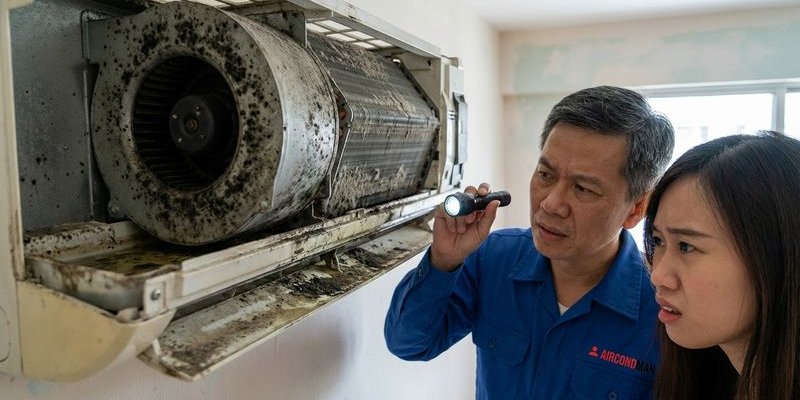
| Evaporator coil | Dark, coated with grey grime | Silver fins visible and shining |
| Blower wheel | Thick dust “fur” on blades | clean black/blue plastic, balanced spin |
| Drainage pan | Yellow slime or jelly buildup | Clear, dry, and free-flowing |
| Air quality | Stale or sour smell | Fresh, crisp airflow |
| Cooling | Weak, compressor runs constantly | Strong breeze, cools room quickly |
What Chemicals Are Used?
Our chemical solution typically contains:
- Alkaline Cleaning Agents: To chemically burn through organic matter like mold without eating through metal.
- Surfactants: These loosen the surface tension of water, allowing the cleaner to penetrate deep between the tight coil fins.
- Corrosion Inhibitors: Essential for protecting the copper pipes and aluminum fins from damage during the wash.
Safe for:
- All major brands found in Malaysia (Daikin, Panasonic, York, Acson).
- Inverter and non-inverter units.
- R22, R410A, and R32 refrigerant systems.
What Chemical Wash Does NOT Include
To set proper expectations, this service focuses on cleaning, not repair.
- ❌ Outdoor Unit Cleaning: This is often a separate add-on service.
- ❌ Gas Top-Up: Refrigerant is a closed system. If you need gas, you have a leak. Top-ups are charged separately.
- ❌ Circuit Board Repair: We clean the hardware, not fix the electronics.
- ❌ Dismantling: As mentioned, full dismantling is an “Overhaul.”
Duration by Unit Type
| Unit Type | Duration |
|---|---|
| Wall-mounted split | 1 - 1.5 hours |
| Ceiling cassette | 1.5 - 2 hours |
| Ceiling concealed | 2 - 2.5 hours |
After the Service
Immediate results:
- Stronger Airflow: You will feel the wind reach further across the room.
- Colder Output: The air exiting the vent will be significantly cooler.
- Odor Removal: The sour “wet sock” smell will be gone.
Over the following days:
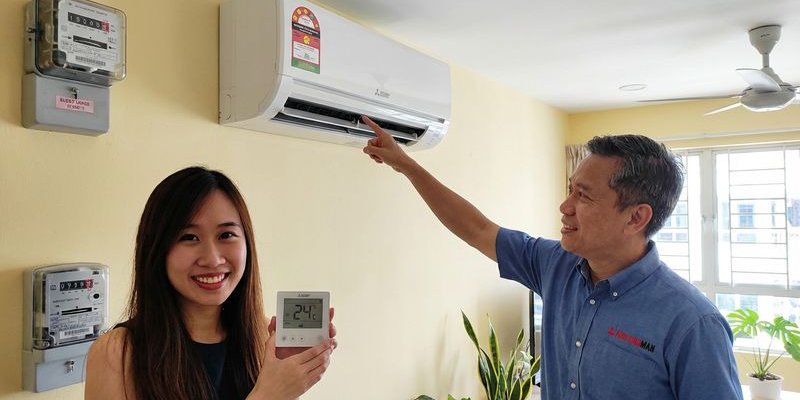
- Lower Electricity Consumption: Your compressor won’t have to work as hard to maintain the temperature.
- Faster Cooling: The room reaches 24°C much faster than before.
Tips for Homeowners
Before the service:
- Clear the Zone: Move TVs, beds, or fragile items away from the area directly below the aircond.
- Report Issues: Tell the technician if you’ve noticed leaking, noise, or error lights blinking.
- Access: Ensure the technician can access the outdoor compressor if you booked that service too.
After the service:
- The 30-Minute Run: Let the unit run for at least 30 minutes to help flush out any remaining moisture from the coils.
- Dry the Filters: If you washed the filters yourself, never put them back wet. This encourages mold growth immediately.
- Monitor for Drips: Watch the unit for the first hour. Occasionally, residual water may drip from the plastic casing; this should stop quickly.
Ready to experience a cleaner aircond? Book your chemical wash with Aircond Man today.