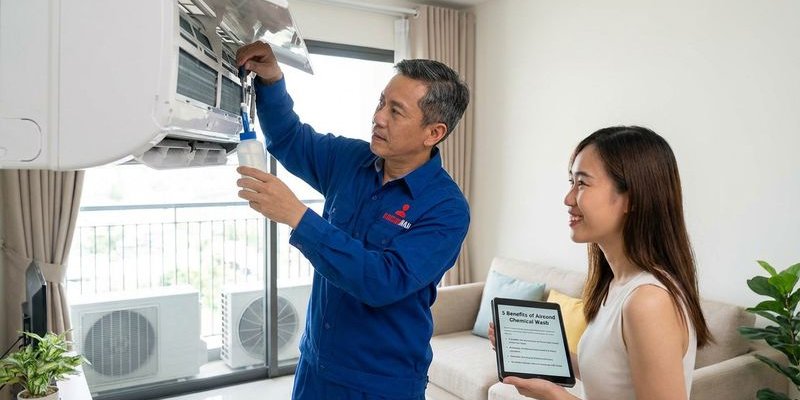
The Short Answer
For most Malaysian households: Once a year.
However, if you run your unit for more than 8 hours daily or live in a high-pollution area (like near a construction site or busy highway), you need a chemical wash every 6 months.
Chemical Wash Frequency Guide
Knowing the right schedule prevents both over-spending and under-maintaining. Use this breakdown to find your specific category:
| Situation | Recommended Frequency | Why This Frequency? |
|---|---|---|
| Normal Use (Sleeping hours only) | Once a year | Removes standard dust buildup before it hardens. |
| Heavy Use (8+ hours/day or WFH) | Every 6 months | Constant airflow accumulates dust 2x faster. |
| Dusty Environment (Roadside/Industrial) | Every 6 months | Traffic soot is oily and sticks to coils stubbornly. |
| Pet Owners (Cats/Dogs) | Every 6-9 months | Fur and dander bypass standard filters quickly. |
| Smokers in Home | Every 4-6 months | Tar from smoke coats the coil in a sticky layer. |
| Commercial Offices | Every 3-4 months | High foot traffic and door opening/closing brings in dirt. |
Pro Tip: Many technicians use the “8-Hour Rule.” If your unit runs for more than 8 hours a day, treat it like a commercial unit and schedule a chemical wash semi-annually.
Factors That Increase Frequency
1. Usage Intensity (The “Work From Home” Factor)
The more air that passes through your system, the more debris it traps. If you work from home and run the aircond from 9 AM to 5 PM, plus sleep with it at night, your unit is doing double duty. This heavy load can cause performance to drop within just 6 months.
2. Environmental Dust & Haze
Malaysia’s annual haze season (typically between August and October) drastically increases the particulate matter in the air. If you live near:
- Busy highways (creating oily carbon dust).
- Active construction sites (creating fine cement dust).
- Open fields (creating pollen and organic debris).
You will likely need more frequent cleaning. The oily dust from traffic is particularly nasty as it forms a “sludge” that water alone cannot rinse off.
3. Indoor Air Quality & Contaminants
Biological contaminants significantly speed up the need for a chemical wash. Smoking indoors releases tar that acts like a glue on your cooling coils, trapping every speck of dust that flies by. Similarly, pet fur from cats and dogs often bypasses the primary filter and weaves itself into the evaporator fins, choking the airflow.
4. Humidity & The “Jelly” Problem
Malaysia’s average humidity consistently hovers above 80%, creating the perfect breeding ground for biofilm. This bacterial growth, often called “jelly” by local technicians, accumulates in the drainage tray and pipes. If left unchecked, this jelly blocks water flow and causes the dreaded leaking unit.
Signs You Need a Chemical Wash Now
Do not wait for your annual schedule if your unit is showing distress signals. Immediate attention is required if you notice:
- The TNB Bill Spike: A dirty unit can consume up to 25% more electricity to provide the same cooling. If your bill jumps without a change in usage, your aircond is struggling.
- The “Jelly” Leak: Water dripping from the indoor unit often means the drainage pipe is choked with bacterial slime.
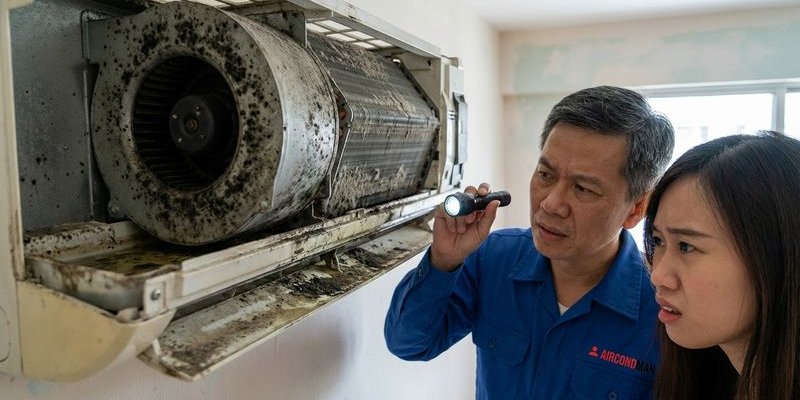
- Musty Odours: A smell resembling damp socks indicates mold is growing inside the blower or on the coil.
- Weak Airflow: If you hear the fan spinning hard but feel very little wind, the evaporator coil is likely choked with dirt.
- Icy Coils: Visible ice forming on the copper pipes or fins suggests airflow is completely blocked.
Chemical Wash vs. General Service
It is vital to understand that these are two very different procedures.
| Feature | General Service (The “Shower”) | Chemical Wash (The “Spa Treatment”) |
|---|---|---|
| Method | Brush cleaning + water rinse of filters & cover. | Chemical solvent application + high-pressure flush. |
| Target | Surface dust on filters and casing. | Deep-seated grime, mold, and biofilm inside the coil. |
| Effectiveness | Maintains airflow. | Restores cooling efficiency and kills bacteria. |
| Cost (Est. 2025) | RM80 - RM120 | RM120 - RM160 |
| Time Required | 30 - 45 minutes | 60 - 90 minutes |
Insider Insight: A general service cannot remove the sticky “jelly” buildup in the water tray. Only the chemical agents and high-pressure flushing used in a chemical wash can effectively dissolve and clear this blockage.
The Ideal Maintenance Schedule
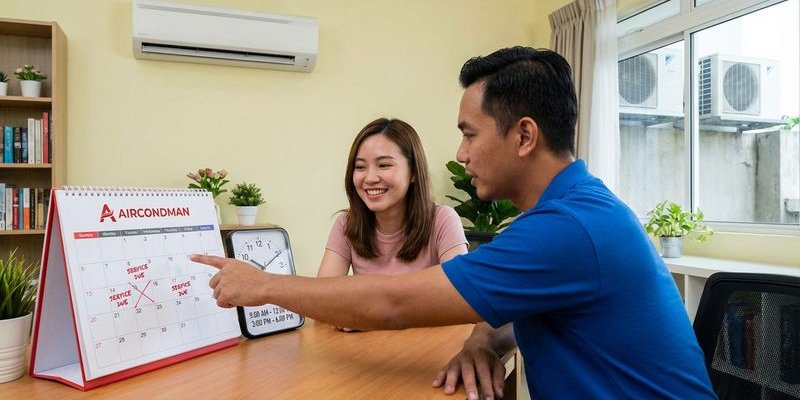
For a typical Malaysian home, a “3+1” schedule offers the best balance of performance and cost:
- January: General Service
- April: General Service
- July: Chemical Wash (Pre-Haze Season Prep)
- October: General Service
This quarterly routine ensures your filters are always clean while giving the unit a deep reset once a year.
Can You Over-Chemical Wash?
Yes, excessive chemical washing can damage your unit. Most chemical solutions are alkaline or acidic to eat through grime. Using them too frequently (more than 3 times a year) on a home unit can corrode the delicate aluminum fins on the evaporator coil, leading to gas leaks.
Safety Tip: Always ask your technician to use an alkaline-based cleaner rather than a harsh acid. Alkaline cleaners are generally safer for the metal components and effectively remove organic buildup like mold.
When Chemical Overhaul is Better
Sometimes a standard chemical wash isn’t enough. If you have neglected your unit for over 12-18 months, you may need a Chemical Overhaul.
This process is different because technicians will dismantle the entire indoor unit and take it down from the wall. Every individual part is soaked and washed thoroughly. You need this if:
- A standard chemical wash failed to fix the smell or weak airflow.
- The blower wheel is heavily impacted with dust (looking like a fuzzy caterpillar).
- The water leak persists despite clearing the drainage pipe.
Money-Saving Tip
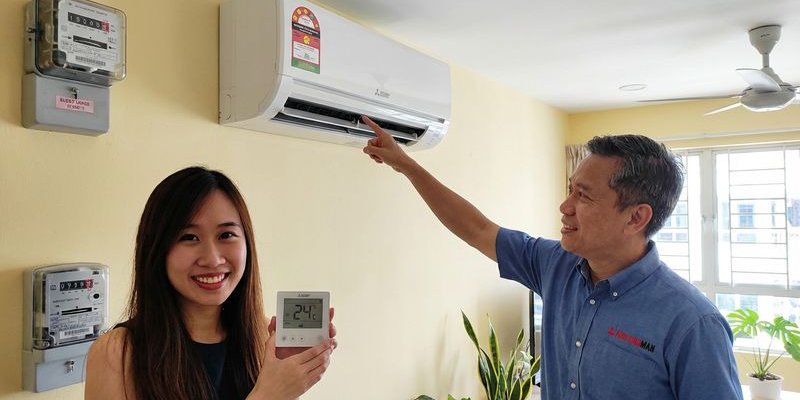
Keep your remote temperature at 24°C.
According to Tenaga Nasional Berhad (TNB), every 1°C drop in temperature can increase your electricity usage by up to 10%. By keeping your filters clean with general service and maintaining a steady 24°C, you reduce the strain on the compressor. This means less wear and tear, and ultimately, fewer expensive chemical washes required over the unit’s lifespan.
Our Recommendation
- Stick to the schedule: Book a general service every 3-4 months.
- Chemical wash annually: Unless you are a heavy user, once a year is sufficient.
- Watch the bill: Let your electricity costs act as an early warning system.
- Listen for strain: Buzzing or rattling often precedes a breakdown.
Ready for a chemical wash? Contact Aircond Man - professional chemical wash from RM120 with 30-day warranty.